
A hit is now decided in its first three weeks


When Ariana Grande's "Hate That I Made You Love Me" entered the Hot 100 in June, it went straight to No. 1. On the Oct. 24 chart, its 20th week, it was still in the top 10.
That kind of start used to be almost impossible. Songs were expected to climb, week by week, as radio stations added them and stores sold them. So we went through every Billboard Hot 100 chart since 1958 to see how top 10 hits begin their runs, and how much of a song's future is now visible in its first three weeks.
Eighty percent of top 10 hits get there within three weeks
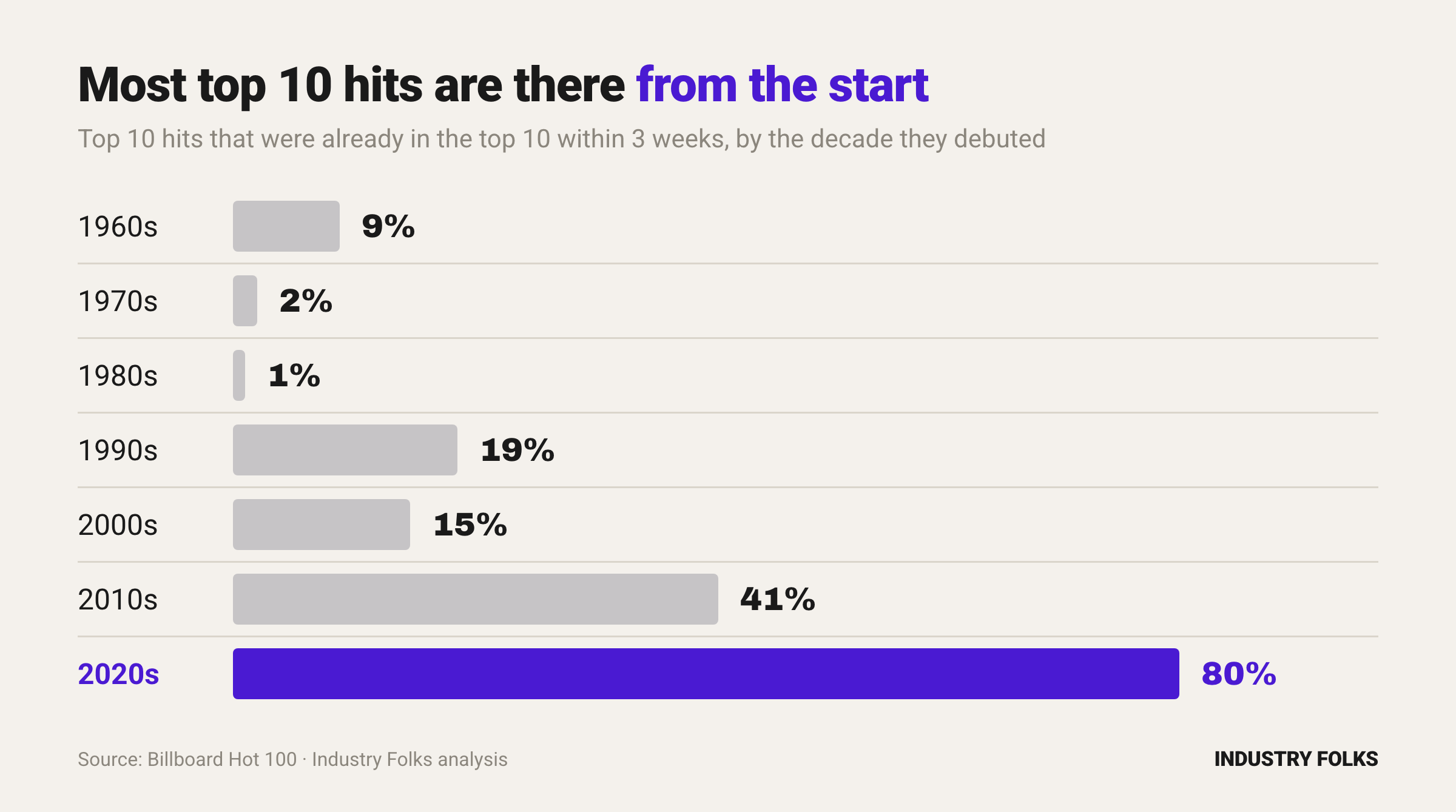
Of the 382 top 10 hits that have debuted so far this decade, 306 were already in the top 10 within three weeks of entering the chart. That's 80%. In the 1980s it was six songs out of 968.
For the typical top 10 hit of the 1980s, the top 10 came in its ninth week on the chart. For the typical hit of the 2020s, it comes in week one. Nearly three in four now debut there, and 69% never climb higher than the position they reached in those first three weeks.
The change came in two steps. The first was in the 1990s, after Billboard moved to measured sales and airplay data in 1991. The second is more recent. The share went from 37% for songs that debuted in 2017 to 69% for 2018, and it hit 91% for 2024. Billboard added streaming to the Hot 100 in 2007 and YouTube views in 2013. The chart data shows when the shift happened, but it can't prove why.
Album weeks explain part of it
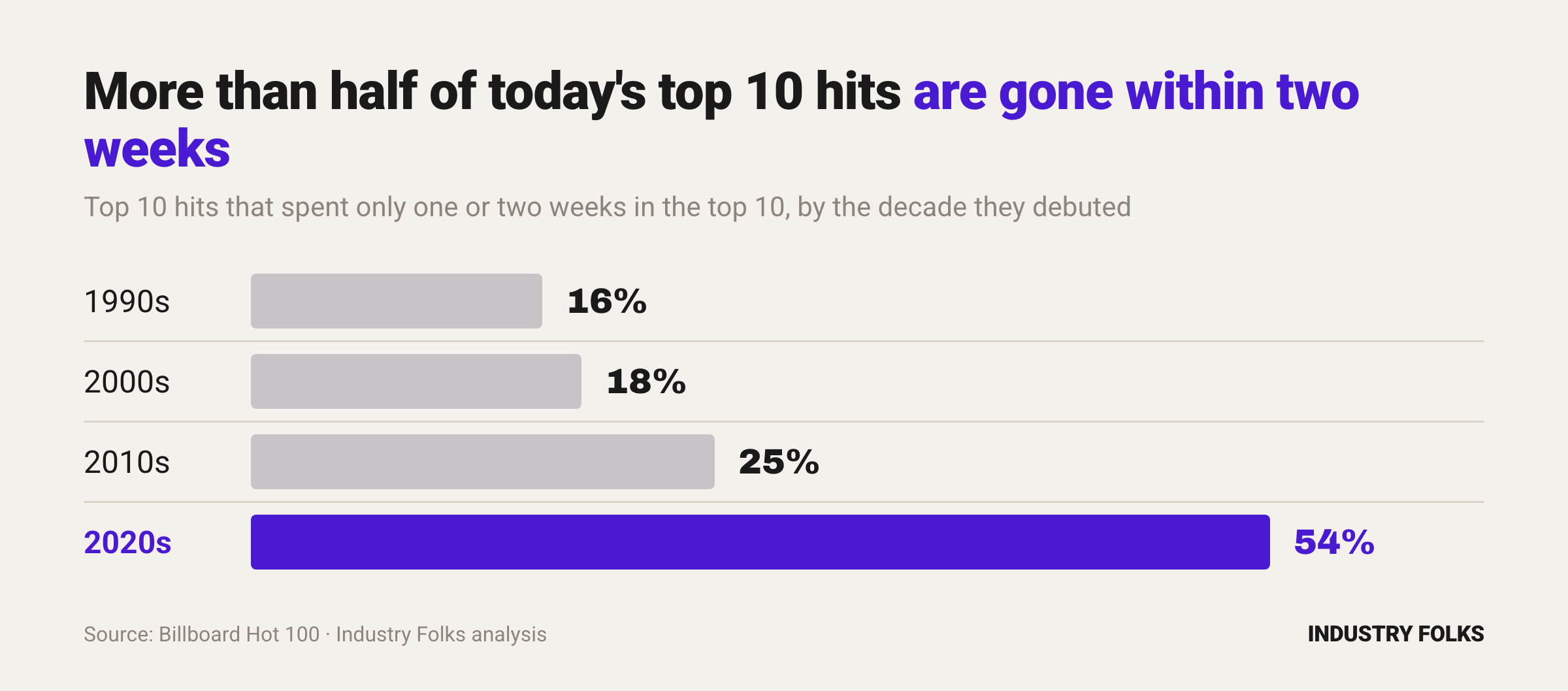
There's a catch in that 80%. When a major album comes out, several of its tracks can enter the top 10 in the same week, and many of them are gone soon after. So 54% of this decade's top 10 hits spent just one or two weeks there, up from 25% in the 2010s.
We tested how much this matters. In the 2020s, 135 top 10 hits debuted there in the same week as another top 10 debut by the same lead artist. Take those out, and 69% of the remaining top 10 hits still got there within three weeks.
It holds up for hits with staying power too. Of this decade's songs that spent at least five weeks in the top 10, 63% were there within three weeks. In the 2010s it was 33%. The 2020s number is lower than the headline 80%, but the fast start has become the normal route either way.
The late bloomer has almost disappeared
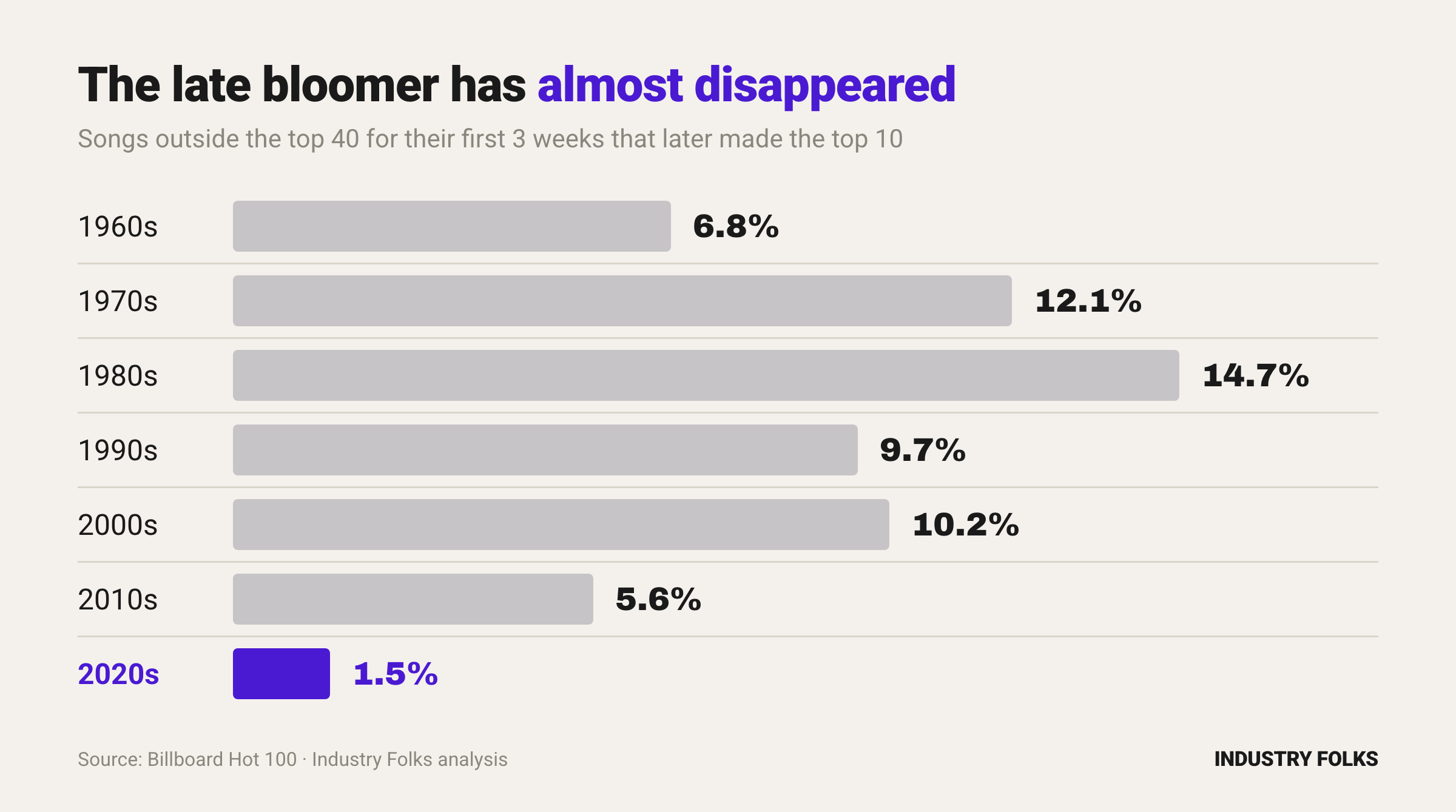
The other side of this is what happens to songs that start slowly. In the 1980s, 14.7% of songs that spent their first three weeks outside the top 40 went on to make the top 10. That was 517 songs. In the 2020s it's 1.5%, or 42 songs out of 2,861.
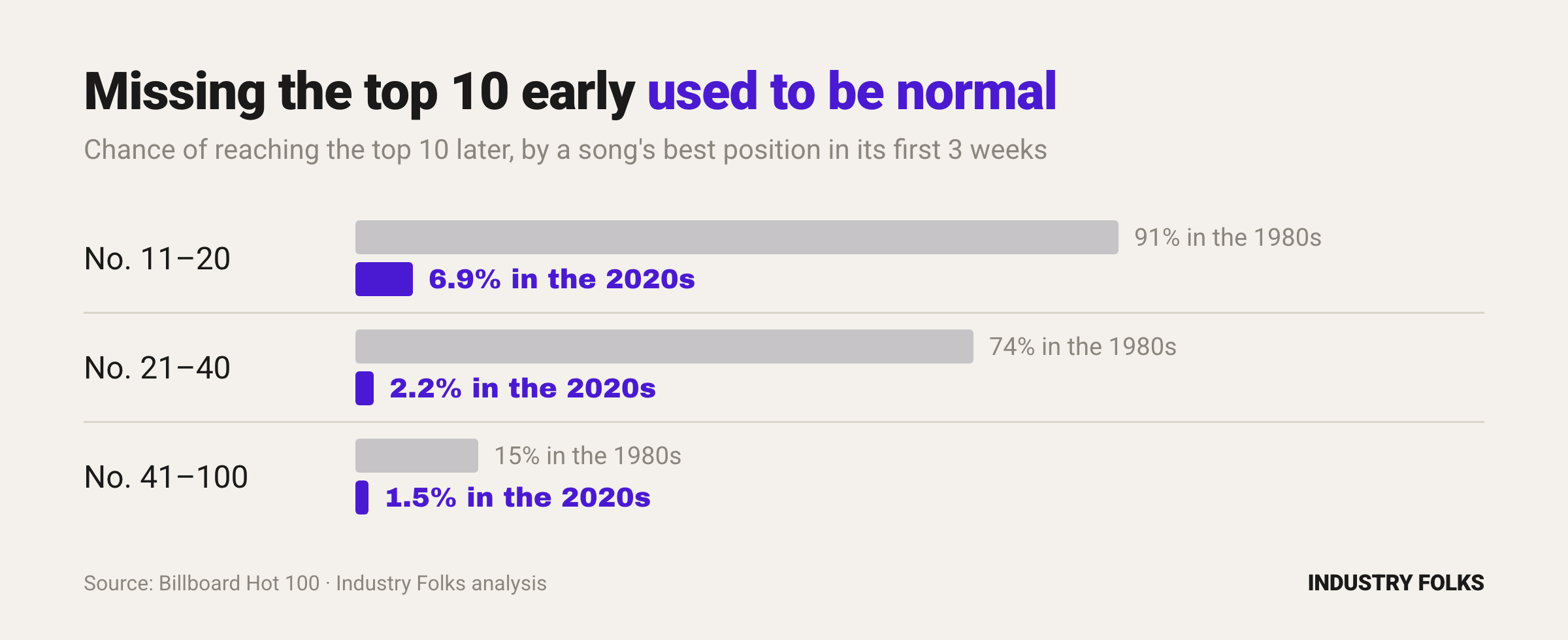
The gap is even wider higher up the chart. In the 1980s, a song that reached No. 11 to 20 in its first three weeks made the top 10 91% of the time, because it was usually on its way up. Today that figure is 6.9%. Many of those songs probably entered high on their release week and fell from there. We didn't test this directly, but it fits the album-week pattern above.
The exceptions are huge
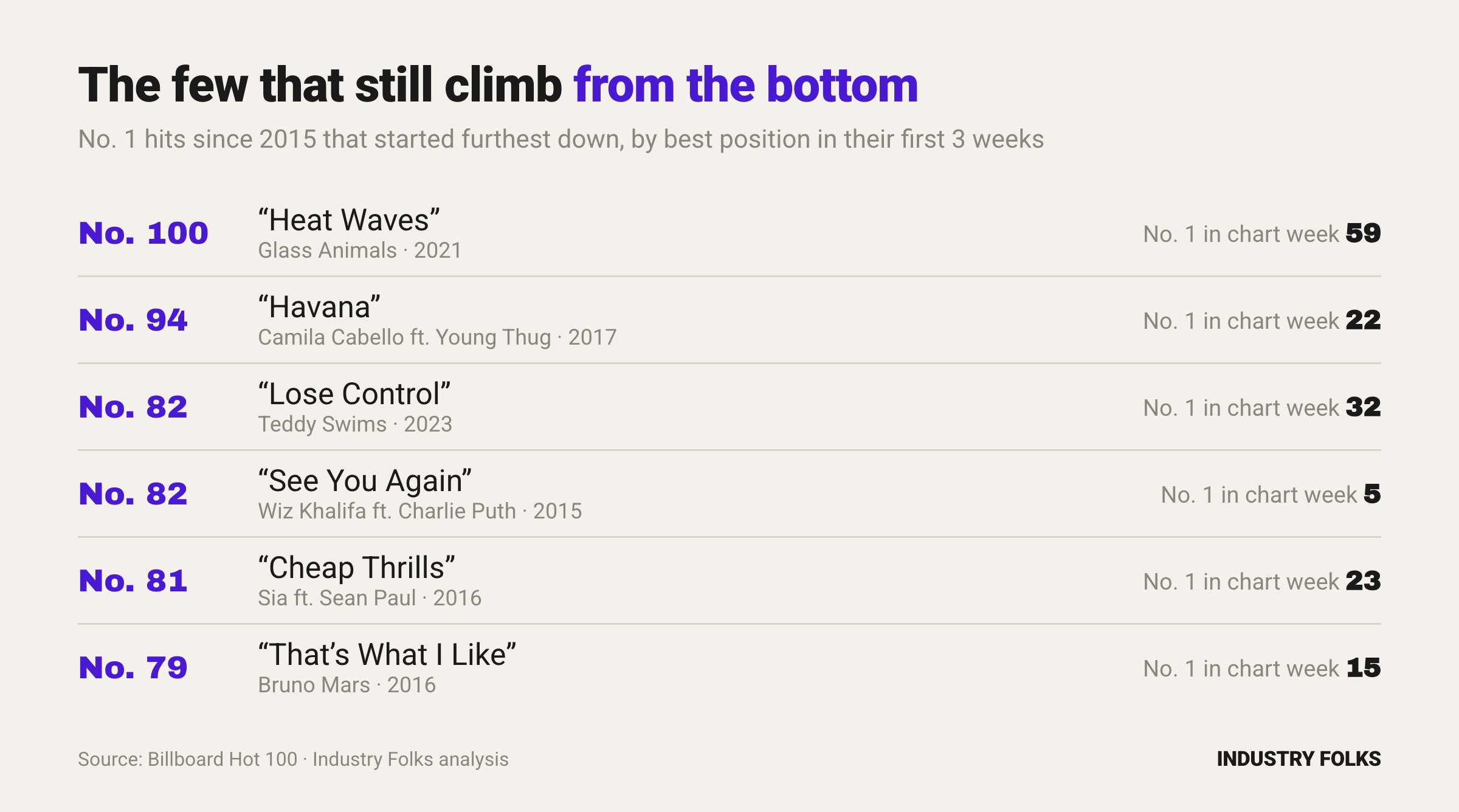
A slow start doesn't rule out a major hit. Glass Animals' "Heat Waves" entered at No. 100 in January 2021 and reached No. 1 in its 59th week on the chart. Teddy Swims' "Lose Control" took 32 weeks to get to No. 1, then spent 80 weeks in the top 10. Alex Warren's "Ordinary" debuted at No. 61 in 2025 and got to No. 1 in its 16th week.
This year's biggest record is also a slow burn. Ella Langley's "Choosin' Texas" debuted at No. 39 in November 2025, didn't make the top 10 until its 11th week and first hit No. 1 in its 16th. It now has more weeks at No. 1 than any song in Hot 100 history. It's still charting, so it isn't counted in the numbers above, and neither are any other songs from the last 10 weeks of charts. It also reached No. 25 within its first three weeks, so it wouldn't count as a late bloomer by our definition.
So a song’s first three weeks now say far more about its chances than they used to. But a fast start doesn’t mean a song will last. More than half of this decade’s top 10 hits spent two weeks or less there. Reaching the top 10 is now mostly settled early but staying there is a separate question.